
What is Single Instance Store?
Single instance store (SIS) is a method for data storage. It reduces data redundancy.
It recognizes the same files or blocks and only stores one copy, which saves space storage needs.
SIS is being extensively used by organizations to optimize the storage of their servers and effectiveness in the backup.
Storing just one version helps SIS avoid extra data copies. This saves both space and money.
This is especially useful on email servers, file repositories, and cloud stores.
Simply put, SIS revolves around smoothing up storage and enhancing data management without compromise in accessibility.
The Single Instance Store Work Process.
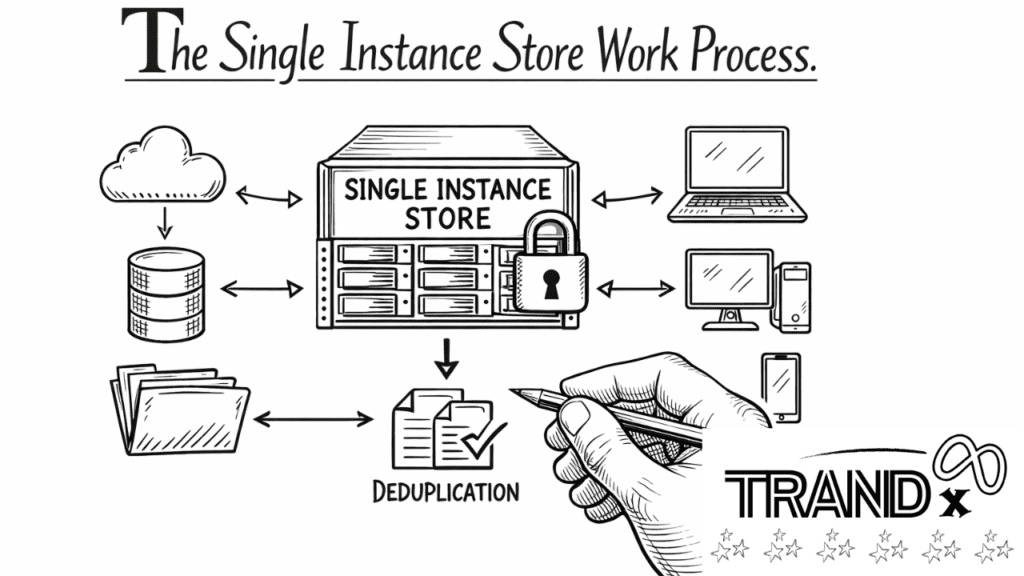
SIS scans files that have the same content using hash functions or fingerprints.
In case of duplication, the system inserts the duplicate into a reference of the original.
In this approach, the user can’t see when it’s finished. However, there are still several instances they will notice, even if only physically.
When 100 users receive the same email attachment, SIS stores just one copy. This copy links to all recipients.
This saves a lot of storage and accelerates the process of backup and recovery.
A lot of enterprise backup systems and cloud services base on SIS to manage the process of handling large scale data efficiently.
Advantages of single instance store.
Storage optimization is one of the greatest benefits of SIS and it will save a lot of money spent on hardware.
It also enhances efficiency of the network with less data blocks being transferred in case of backups.
SIS also offers a better data management system. This helps you track, restore, or archive files easily.
Firms with email servers benefit from SIS. It reduces duplication of attachments stored in various mailboxes.
Likewise, cloud providers use SIS to provide cost efficient storage solutions to their clients.
SIS leads to environmental sustainability by removing the need to have redundancy that reduces space and energy demands.
Single Instance in Email Servers.
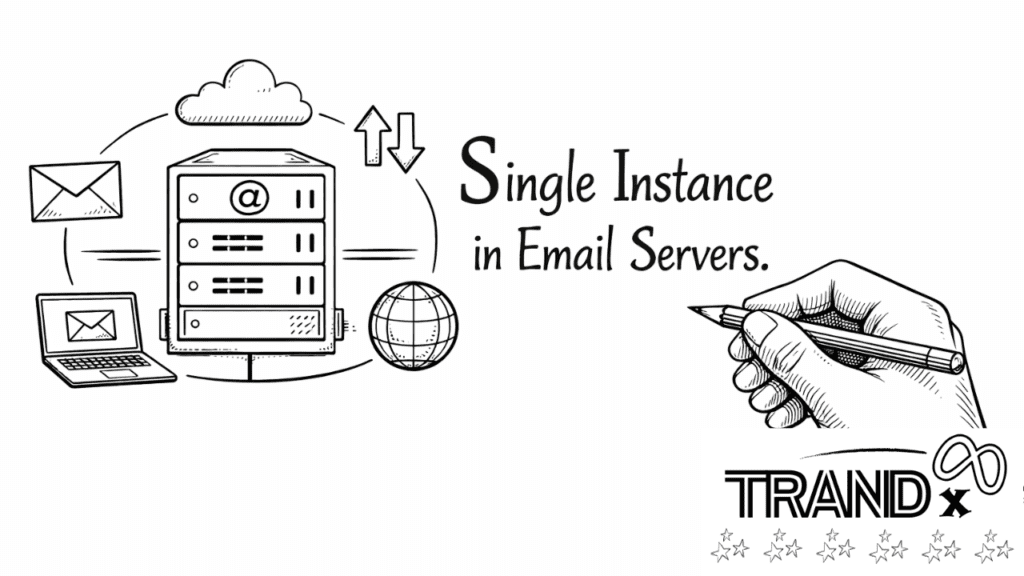
One of the most popular uses of SIS is email systems.
When the huge attachment is sent to many recipients, SIS will make sure that only a single copy is saved.
This optimization will decrease server loads and optimize storage use in the long run.
Enterprise mail layers such as Microsoft Exchange often use SIS to check the duplication of attachments.
It also improves search and retrieval, as less data blocks should be indexed.
SIS plays a significant role in terms of efficient email storage and cost saving to organizations that have thousands of users.
Single Instance Store and Traditional Storage.
SIS detects duplications unlike in traditional storage where each file is stored as a separate file.
The conventional systems are wasteful in their storage as they store more than one copy of the same data.
SIS is the most efficient, as it refers to a single version saved, and does not impact on access by users.
As an example, keeping 1,000 copies of the same PDF would cost 1,000 copies in a conventional storage.
In SIS, there is only a single copy and all the references refer to it.
This saves space as well as making backup processes, replication processes, and archiving activities easy.
Single Instance store Practical Applications.
SIS principles are often used in cloud services, such as Amazon S3 and Azure Blob Storage.
SIS is useful in large-scale implementation of email servers, virtual desktop infrastructure and backup systems.
As an example, a single instance can be shared by several users downloading the same software installer.
Data deduplication appliances as well are based on the SIS technology in order to streamline storage of the enterprise.
There is a direct benefit to the healthcare systems, media libraries, and financial institutions.
SIS enhances efficiency and scalability of the contemporary IT environment through minimizing storage needs.
Single instance store implementation.
Deduplication-enabled storage solutions are needed in order to do the implementation.
Administrators need to set servers to scan, identify and store distinct copies effectively.
Retention and access policies are such that the user does not notice the difference in file accessibility.
Cloud storage tends to automate SIS and as such, it is easy to implement by companies that do not have sophisticated IT departments.
Enterprise backup software incorporates SIS to minimize backup windows and cost of storage.
Data integrity through proper monitoring also eliminates the occurrence of accidental loss of important files.
Frequent Problems in Single Instance Store.

One of the challenges is the hash collision where different files might be considered the same file by means of hash.
This demands the use of sound algorithms and verification to support accuracy of data.
Also, SIS can create complications during file restoration in case the pointers are broken or the metadata lost.
Organizations should be very careful in planning the storage architecture which involves SIS coupled with other strategies such as compression.
Security is also a concern, particularly where pointers are made to connect several users with confidential files.
Various obstacles have not deterred the value of SIS as a solution due to its benefits in terms of cost savings and efficiency.
Single Instance Store and Cloud storage.
SIS is implemented by cloud providers to optimize the multi-tenant environment.
Many clients who have the same content do not duplicate data needlessly.
This guarantees an expedited accessibility, reduced prices and less footprint on the environment.
To businesses, SIS implies an ability to predict storage costs and scale easier.
It is also efficient in data transfer, as less blocks are either downloaded or uploaded.
SIS, together with encryption and backup, improves effective, safe cloud storage.
Key Takeaways
Single instance store is an optimization method of data which discards copies.
It increases storage efficiency, cost reduction and backup and recovery operations.
SIS is prevalent in email servers, in the cloud, and enterprise backup systems.
Through SIS, organizations are able to conserve resources, ease the management and scale more easily.
It has a clear structure such that users do not notice any difference though its back-end architecture is smarter and leaner.
In general, SIS is one of the pillars of the contemporary data storage strategy.
FAQs
What is the major role of Single Instance Store?
SIS saves money and space through the storage of a single copy of the same data, which mitigates storage redundancy.
systems are the best beneficiaries of SIS?
Cloud storage, enterprise backup and email servers are also benefited by SIS.
What does SIS do in the case of duplicated email attachments?
SIS keeps only a single copy and connects it with every recipient to save on storage and enhance efficiency.
Does SIS equal data deduplication?
SIS is a type of deduplication that emphasizes on the removal of duplicate files or blocks.
Does SIS have the capability of influencing file access speed?
No, users get the same access, with SIS being able to make pointers to the stored copy in a transparent manner.
Does it have SIS in cloud storage?
Major cloud providers make use of SIS to minimize costs, enhance efficiency, and deal with multi-tenant storage.